


Production cell lines, ingredients and excipients in medicines
Production cell lines

Ingredients

Excipients

⚠️ Important messages for patients
- Always take or use your medicine(s) exactly as directed or prescribed by your healthcare professional (HCP), such as your doctor or pharmacist
- Do not stop, delay, change or alter the way you take or use your medicine(s) without first discussing it with the HCP who prescribed or supplied it to you
- Always consult your HCP if you have any questions or before making any decisions about your treatment
- For Islamic guidance, seek advice from your local Imam or a trusted Islamic scholar – ideally someone with relevant knowledge and expertise in the fiqh (Islamic rulings) of medicines
- Use the information gathered to make an informed decision together with your HCP and, if needed, your local Imam or trusted Islamic scholar
Disclaimer
- This resource is for educational purposes only. It does not constitute clinical, medical, or professional healthcare advice and should not replace individual clinical judgement or qualified religious guidance
- Always consult your doctor, pharmacist, or other healthcare professional regarding your own medical conditions or for advice on treatment options
- Healthcare professionals remain fully responsible and accountable for decisions made within their own scope of practice.
Further resources
- How to find out if a medicine contains haram ingredients/excipients
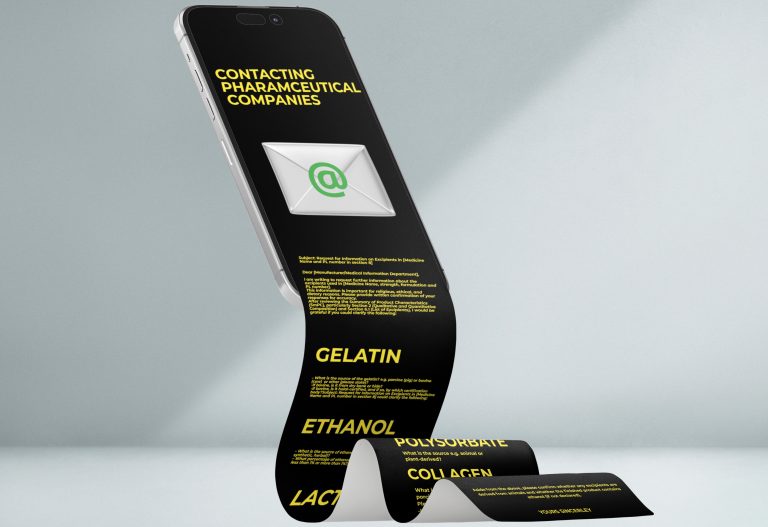
- Email template – to pharmaceutical companies
- How we classify medicines based on ingredients and excipients
- Reason codes: how we apply our classifications to real medicines – our classification codes for ingredients and/or excipients
- What to do if a medicine contains haram ingredients/ excipients
- Supporting Muslim patients in consultations – a guide for healthcare professionals
- External resources for healthcare professionals