

How to check if a medicine contains ingredients and/or excipients from haram sources
This resource supports the Muslim community and their healthcare professionals (HCPs). It explains how to check medicines for ingredients and excipients that may be an issue for the Muslim community, and what to do next.
⚠️Always speak to your healthcare provider before making any decisions or changes. Do not stop or delay medicines without seeking medical advice first.
How to check if a medicine contains ingredients and excipients from haram sources
Click each drop down below to find out more:


3️⃣Step 3: Seek more details if needed (click to open)
⚠️If the information from the PIL or SmPC is not clear, or insufficient to help you determine if a medicine contains ingredients and excipients from haram or halal sources:
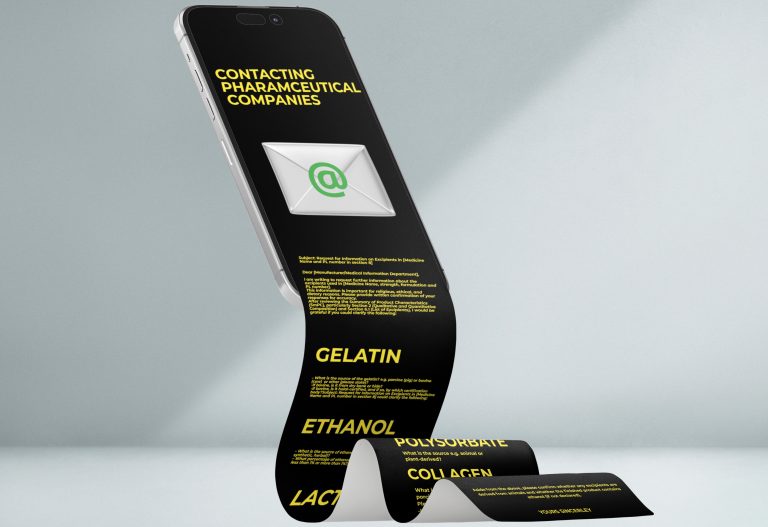
- 📧 Contact the pharmaceutical company to clarify (contact details of the medicines information department for pharmaceutical companies can be found in the PIL, SmPC or 🔗emc website)
- 📌Please note: Contact details may be listed under ‘Marketing Authorisation Holder (MAH)’ and may or may not be the same company as the manufacturer
- You may need to ask the pharmaceutical company about:
- The source of the ingredient and/or excipient – whether it is animal, plant or synthetic
- Halal-certification – whether there is any halal certification, and which authority or organisation has issued it
- The use of ethanol during the manufacturing process, and the percentage of ethanol present in the final product
- Cross-contamination risk – whether there is any potential risk of cross-contamination with haram or impure substances – please note that this information is not always readily available.
- You can use HalalMed’s 📧 email template here to help you request this information.
✅Next steps
- 📧 Check replies – if the pharmaceutical company emails you back and the ingredients or excipients are confirmed haram, unclear, or from doubtful sources:
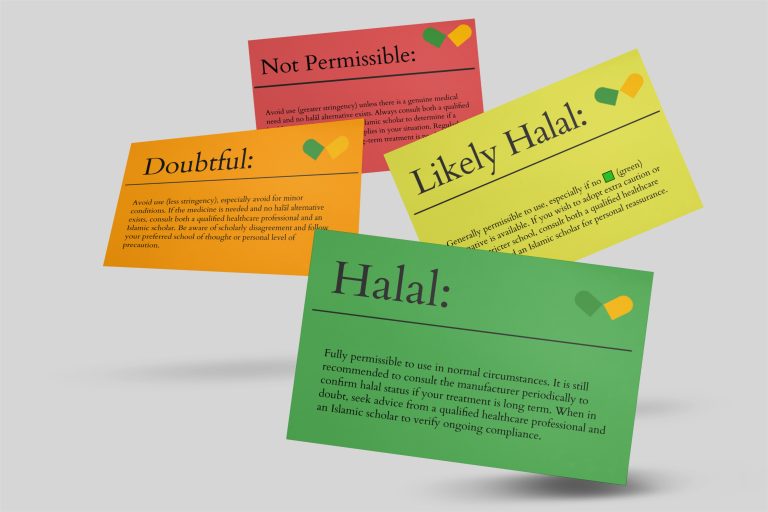
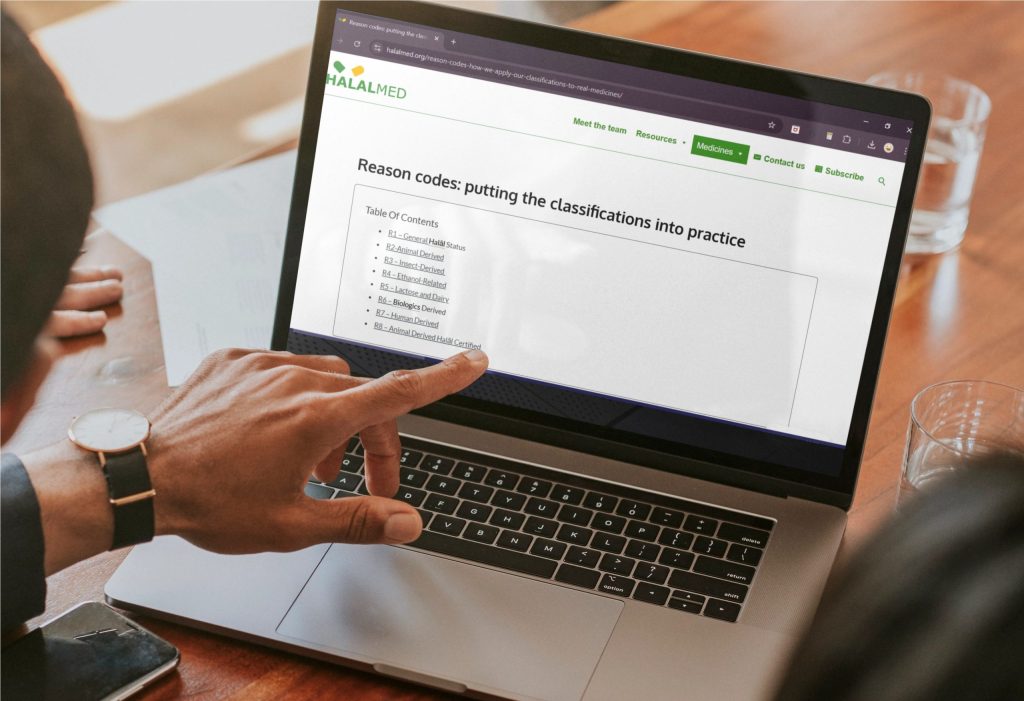
- 👉🗂️ Review and classify them using HalalMed’s classification system here and supporting resource here, to help determine permissibility
- 📘 Read guidance – it’s important to remember that even if a medicine contains ingredients and/or excipients from haram sources, it does not always mean it is prohibited to take or use. You may find our resource on ‘What to do if a medicine contains ingredients and/or excipients from haram sources‘ useful to understand when such medicines may still be acceptable to use, and why halal alternatives may not always be available.
- 🔍 Research ingredients – explore our detailed resources here or use the quick checklist here to learn more about individual ingredients or excipients that may raise concerns for the Muslim community, including their halal or haram status.
⚠️ Important messages for patients
- Always take or use your medicine(s) exactly as directed or prescribed by your healthcare professional (HCP), such as your doctor or pharmacist
- Do not stop, delay, change or alter the way you take or use your medicine(s) without first discussing it with the HCP who prescribed or supplied it to you
- Always consult your HCP if you have any questions or before making any decisions about your treatment
- For Islamic guidance, seek advice from your local Imam or a trusted Islamic scholar – ideally someone with relevant knowledge and expertise in the fiqh (Islamic rulings) of medicines
- Use the information gathered to make an informed decision together with your HCP and, if needed, your local Imam or trusted Islamic scholar.
📄Further resources
- Ingredients and excipients in medicines – detailed resources on ingredients and excipients commonly used in medicines which may raise concerns for the Muslim community
- Checklist of ingredients and excipients – a quick checklist of ingredients and excipients commonly used in medicines which may raise concerns for the Muslim community
- What to do if a medicine contains ingredients and/or excipients from haram sources – find out when it may still be acceptable to use medicines containing ingredients and excipients from haram sources, and why a halal alternative may not always be available
- Email template – to request clarification from pharmaceutical companies
- Reason codes: how we apply our classifications to real medicines – our classification codes for ingredients and excipients
- How we classify medicines based on ingredients and excipients – supporting guide for reason codes
- Supporting Muslim patients in consultations – a guide for healthcare professionals
- External resources – for healthcare professionals.
Disclaimer
- This resource is for educational purposes only. It does not constitute clinical, medical, or professional healthcare advice and should not replace individual clinical judgement or qualified religious guidance
- Always consult your doctor, pharmacist, or other healthcare professional regarding your own medical conditions or for advice on treatment options
- Healthcare professionals remain fully responsible and accountable for decisions made within their own scope of practice.