

Ethanol in medicines: additional Islamic information
Pleases see the ‘Why the Ḥanafī School Is Our Reference Point‘ section on our page ‘How we classify medicines based on ingredients and excipients’ (link) for a detailed explanation of what we are referring to when we say the ‘majority opinion‘ on the ‘Ethanol in medicines’ page, particularly aligned with the Ḥanafī school. In practice, most Muslims, especially those who are unaware of or do not formally adhere to any specific madhhab (school of thought/jurisprudence)—tend to follow the dominant view adopted by the majority of scholars today.
When ethanol becomes mufsid (Harmful or Toxic Substance)
Some ethanol-containing products may be considered mufsid (harmful or toxic) rather than khamr. This classification refers to substances that are toxic or dangerous in nature, rather than intoxicating. Such substances are not consumed for pleasure, and their harm comes before any intoxicating effect.1
This applies in two main cases:
- External Products Misused Internally
Products like hand sanitisers or ethanol-based topical creams often contain very high concentrations of ethanol and other toxic chemicals. These are meant for external use only.
If someone drinks these products, they will likely be harmed (e.g., poisoning or organ damage) before they could even become intoxicated. - Medicines Taken in Excess. Some oral medicines (e.g., cough syrups) contain ethanol but are safe in small therapeutic doses. If someone overdoses or takes much more than the recommended dose, it may cause serious harm before any intoxication occurs. This is a case of misuse and is considered sinful and harmful in Islam and medicine.2
Differences of opinion
Islamic scholars hold differing opinions on the permissibility (ḥilliyyah) of ethanol in medicines and other non-beverage products. These differences are primarily based on three key factors:
1. Source of Ethanol
Scholars differentiate between:
- Khamr sources: Ethanol derived from dates, grapes, or raisins (ashribat al-arbaʿah) — considered khamr by consensus.
- Non-khamr sources: Ethanol from corn, sugarcane, wheat, or synthetic chemical processes — not considered khamr by the majority, but can be considered muskir if intoxicating.
The ruling depends on the origin and nature of the ethanol. If it is derived from a khamr source (such as fermented grapes or dates), it is regarded as najis (ritually impure) and haram. However, if it is produced from a non-khamr or synthetic source, it is considered tahir (pure). The ruling also varies according to its intended use — whether it functions as an intoxicant (capable of causing drunkenness) or as an industrial solvent (toxic and not suitable for drinking).
2. Concentration in the
Final Product
Scholars also differ on whether ethanol above 1% is permissible in non-beverage products such as medicines and hygiene products.
The 1% ethanol threshold is commonly used as a practical guideline to determine whether a product has the potential to cause intoxication. Some adopt a more stringent limit of <0.5%, based on the assumption that anything above this level could lead to intoxication. However, this view is overly cautious, as the dominant scientific evidence supports that intoxication is not possible up to 1% ethanol content.
Accordingly, <1% is applied here as the standard threshold. Those who prefer a more conservative approach may choose to follow the <0.5% limit, but it should not be regarded as the required or absolute maximum.
3. Application of ʿUmūm al-Balwa (Widespread hardship)
ʿUmūm al-Balwā is a legal principle in Islamic jurisprudence that refers to a situation of widespread public hardship or difficulty that is common, unavoidable, and affects a large number of people. When such hardship becomes pervasive and fulfilling a ruling becomes excessively burdensome or practically impossible for the general public, scholars may allow dispensations (rukhṣah) or adopt less strict rulings to ease the difficulty. This principle is rooted in the Qurānic objective of removing hardship from the Ummah and is used cautiously by scholars to strike a balance between upholding the law and addressing real-world necessity. In the context of medicines, ʿumūm al-balwā is often invoked when ethanol-based or otherwise doubtful ingredients are commonly used and suitable alternatives are not readily available, allowing for conditional permissibility in therapeutic contexts.
In cases where ethanol-containing products are widespread and unavoidable, some scholars apply the legal principle of ʿumūm al-balwā to permit their use, especially in medical contexts.
Summary table
| Issue | Majority opinion | Minority opinion |
|---|---|---|
| Ethanol from khamr sources | Haram if >1% (unless dire need) | Haram if >1% (unless dire need),haram regardless of need or use |
| Ethanol from non-khamr | Halal if non-intoxicating and used medicinally | Haram if ethanol >1%, unless medicinal need or necessity |
| Personal care/industrial | Permissible (as non-consumable and/or mufsid) | Haram if ethanol >1%, unless medicinal need or necessity |
| ʿUmūm al-Balwa | Used to justify permissibility in widespread cases | May allow temporary dispensations in case of need and necessity. |
<— go back to ‘Ethanol in medicines’ page
⚠️ Important messages for patients
- Always take or use your medicine(s) exactly as directed or prescribed by your healthcare professional (HCP), such as your doctor or pharmacist
- Do not stop, delay, change or alter the way you take or use your medicine(s) without first discussing it with the HCP who prescribed or supplied it to you
- Always consult your HCP if you have any questions or before making any decisions about your treatment
- For Islamic guidance, seek advice from your local Imam or a trusted Islamic scholar – ideally someone with relevant knowledge and expertise in the fiqh (Islamic rulings) of medicines
- Use the information gathered to make an informed decision together with your HCP and, if needed, your local Imam or trusted Islamic scholar
Disclaimer
- This resource is for educational purposes only. It does not constitute clinical, medical, or professional healthcare advice and should not replace individual clinical judgement or qualified religious guidance
- Always consult your doctor, pharmacist, or other healthcare professional regarding your own medical conditions or for advice on treatment options
- Healthcare professionals remain fully responsible and accountable for decisions made within their own scope of practice.
References
- Shaykh Rafāqat Rashid. Revising The Fiqh of Khamr and Alcohol: Ethical Use from an Islamic Perspective. Al Balagh Academy. 2024 May. Available at: https://www.albalaghacademy.org/blog/revising-the-fiqh-of-khamr-and-alcohol/ ↩︎
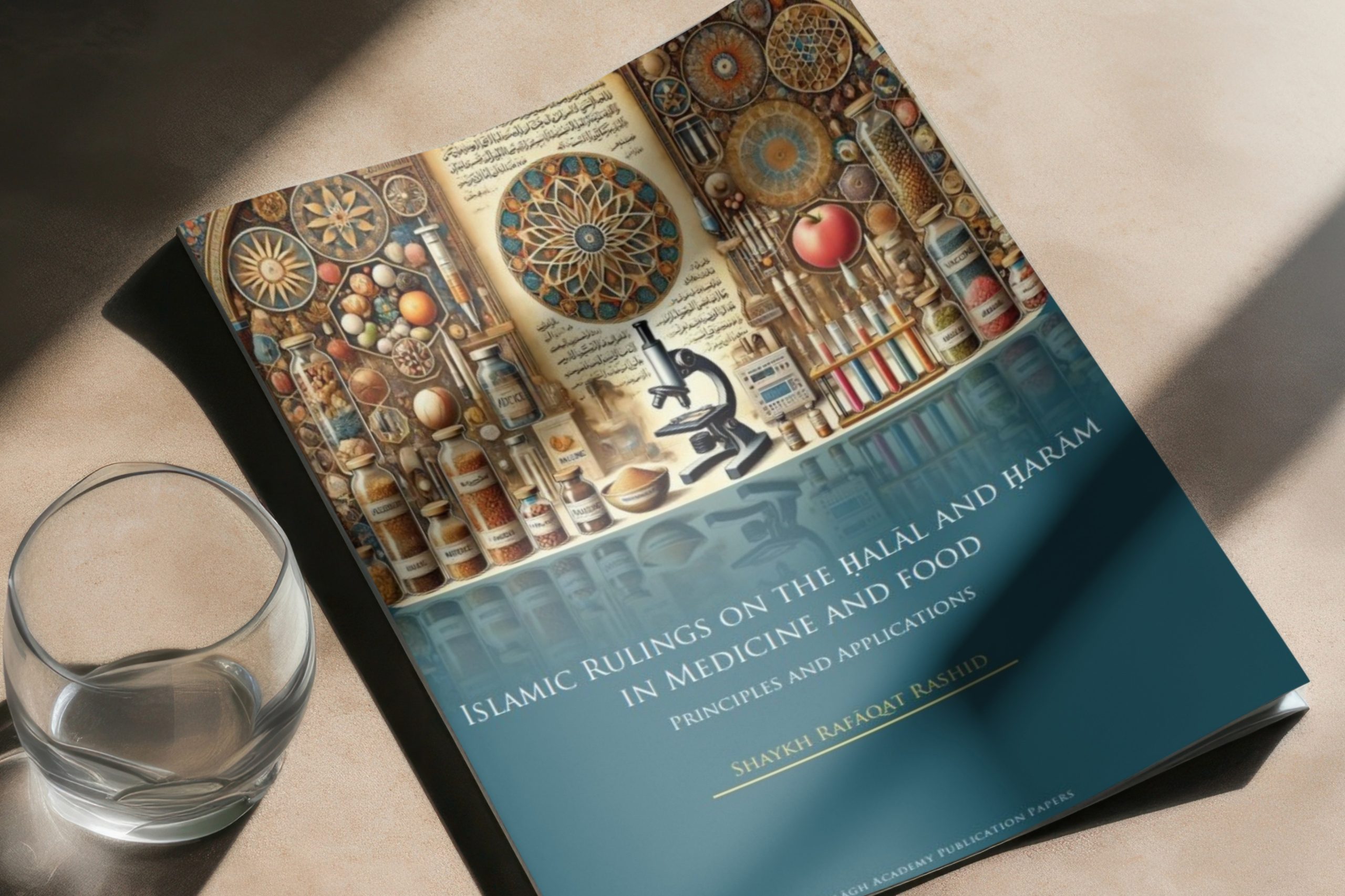
- Rashid, R. (n.d.). Islamic rulings on the ḥalāl and ḥarām in medicine and food: Principles and applications. Al Balāgh Academy Publication Papers ↩︎