

Chinese hamster ovary cells in medicines: additional Islamic information
| Source | Hanafi and Maliki | Shafiʿi | Hanbali |
|---|---|---|---|
| CHO cells | ✅ The CHO cell line itself is impure (najis) and its direct use is haram, but products (proteins) derived from it are considered pure (tahir) and therefore halal to consume. | ❌ Haram to consume. Both the cell line and its derived products are regarded as impure and impermissible (haram). | ❌ Haram to consume. Both the cell line and its derived products are regarded as impure and impermissible (haram). ✅Some Hanbali scholars hold same position as Hanafi and Maliki and consider halal |
CHO (Chinese Hamster Ovary) cells come from the Chinese hamster, which is a rodent and therefore haram, rendering cell lines impure and haram according to all four Sunni schools of thought.
However, scholars differ on the status of medicines or proteins produced using these cells. The Hanafi and Maliki schools generally consider the final product pure (tahir) and ḥalal, because it is a completely new substance that has been chemically purified (istihalah) and is separate from the impure source. In contrast, the Shafi’i and most Hanbali scholars regard both the cell line and anything produced from it as impure and haram, since no complete transformation (istihalah) occurs and the product remains linked to the impure origin.
Despite this difference, all schools agree that if there is no equally effective halal alternative, then using CHO-based medicines is permissible under necessity (darurah) or pressing medical need (hajah) until a suitable substitute becomes available.1
What is istihala (transformation)?
Istihala is the complete chemical transformation of a legally impure (najis) substance into a completely new substance that is considered legally pure (tahir). The latter substance no longer retains the chemical properties of its former state (i.e. there has been a change of the original substance in form, colour, smell, taste, nature, effect, name, use, properties and is irreversible). The substance can undergo this chemical change through scientific or natural means.2 An example of istihala includes turning wine into vinegar.3
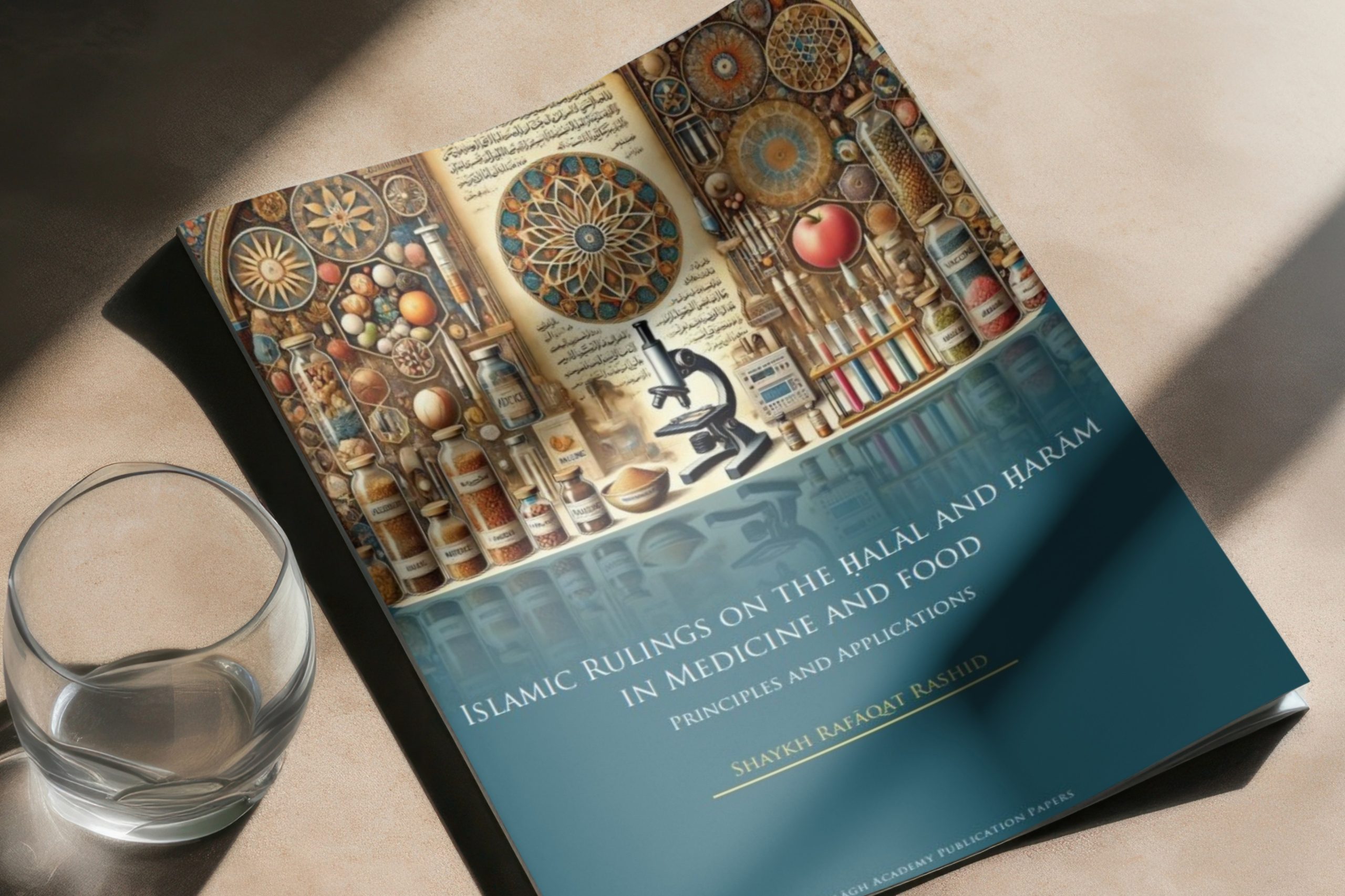
For more detailed information on istihala, you can refer to this e-book.
<— go back to ‘Chinese hamster ovary cells in medicines’ page
⚠️ Important messages for patients
- Always take or use your medicine(s) exactly as directed or prescribed by your healthcare professional (HCP), such as your doctor or pharmacist
- Do not stop, delay, change or alter the way you take or use your medicine(s) without first discussing it with the HCP who prescribed or supplied it to you
- Always consult your HCP if you have any questions or before making any decisions about your treatment
- For Islamic guidance, seek advice from your local Imam or a trusted Islamic scholar – ideally someone with relevant knowledge and expertise in the fiqh (Islamic rulings) of medicines
- Use the information gathered to make an informed decision together with your HCP and, if needed, your local Imam or trusted Islamic scholar
Disclaimer
- This resource is for educational purposes only. It does not constitute clinical, medical, or professional healthcare advice and should not replace individual clinical judgement or qualified religious guidance
- Always consult your doctor, pharmacist, or other healthcare professional regarding your own medical conditions or for advice on treatment options
- Healthcare professionals remain fully responsible and accountable for decisions made within their own scope of practice.
References and resources
- Islamic use of Hamster Ovary by Shaykh Dr Rafaqat Rashid ↩︎
- Siddiqi, Nasrullah. (2020). Comparative Study of Istihalah Shariah and Chemical Changes. WHS 2020. 89-94. Accessed 27.1.2025 from: https://www.researchgate.net/publication/354339446_Comparative_Study_of_Istihalah_Shariah_And_Chemical_Changes ↩︎
- Jamaludin, Mohammad & Ramli, Mohd Anuar & Hashim, D.M. & Ab Rahman, Suhaimi. (2012). Fiqh Istihalah: Integration of Science and Islamic Law. Revelation and Science. 2. 49-55. Accessed 27.1.2025 from: https://pmc.ncbi.nlm.nih.gov/articles/PMC2014957/ ↩︎