

Pancreatin in medicines
This resource explains the use of pancreatin in medicines and outlines the Islamic rulings on its permissibility.
What is pancreatin and how is it used in medicines?
Pancreatin (also referred to as pancrealipase or pancreatic enzymes), is a medication containing a selection of digestive enzymes that help to break down food in the digestion process1. It is prescribed to those who do not produce these enzymes sufficiently, and is important to prevent malnutrition. Malnutrition has been associated with significantly poorer health outcomes, such as shorter life expectancy and more severe lung disease, in these patients2.
Conditions for which this medication is prescribed include:
- Cystic fibrosis
- Pancreatic cancer
- Chronic pancreatitis1.

🕌 Islamic ruling on pancreatin
| Source | Ruling (Hanafi,Maliki, Shafiʿi and Hanbali) |
|---|---|
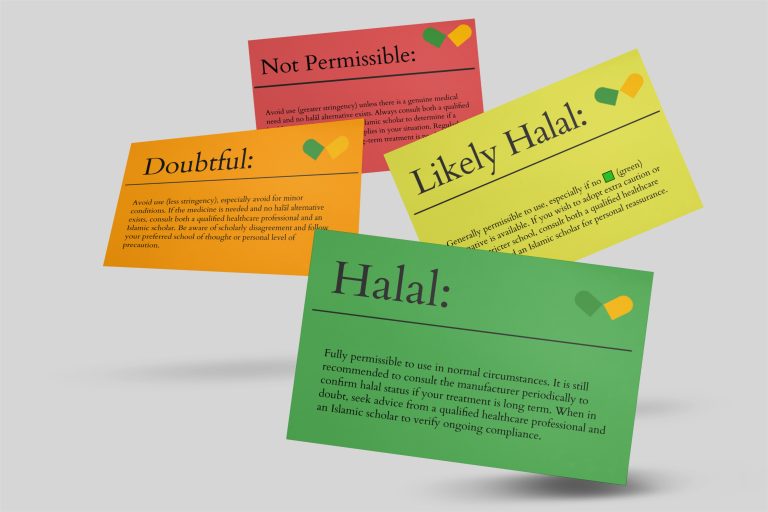
| Porcine (pig)-derived pancreatin | Haram. Unless there is a medical necessity, where there is no viable halal alternative available. Note: In the UK and US, there is currently no viable halal alternative. |
According to all four Sunni schools of law, porcine-derived pancreatin is haram due to its source, as pig and its derivatives are intrinsically impure (najis).
However, its use may be permissible under necessity (darurah) or serious medical need where no suitable halal alternative exists, especially as pancreatin is usually prescribed for serious conditions in which omission may cause significant harm.7
Since all UK and US licensed pancreatin is currently pig-derived4 5 6, and no viable halal alternative exists, porcine-derived pancreatin may be used on the basis of medical necessity.
If you are unsure about taking or using medicines containing ingredients and/or excipients from haram sources, seek guidance from a practising Muslim HCP such as a pharmacist or doctor. Alternatively, consult your local Imam or a trusted Islamic scholar, ideally one who has knowledge and expertise in the fiqh (Islamic rulings) of medicine.
💭Did you know?
Even if a medicine contains an ingredient/excipient from a haram source, it may still be permitted in certain cases. Here are three Islamic maxims (principles):
- Medical need or necessity (hajah and darurah): Under this principle, if there is a medical necessity, such as an emergency situation, or where there is a strong chance the individual’s health will deteriorate, and if no viable halal alternative is available, then it is permitted to take a medicine containing pancreatin derived from haram sources, until a viable halal alternative becomes available.
- An impermissible medicine becomes permissible if five conditions are fully met (click here to learn what the five conditions are).
- Hardship begets facility (al-mashaqqa tajlib at-taysir): Under this principle, if applying religious practice becomes too burdensome or creates hardship, then leniency can be applied to ease it (click here to read more). If you have tried your best to seek an alternative halal medicine and it becomes too difficult for you, this principle allows you to take/use the medicine you have been prescribed/supplied.
⚠️ Important information for patients
- Always take or use your medicine(s) exactly as directed or prescribed by your healthcare professional (HCP), such as your doctor or pharmacist
- Do not stop, delay, change or alter the way you take or use your medicine(s) without first discussing it with the HCP who prescribed or supplied it to you
- Always consult your HCP if you have any questions or before making any decisions about your treatment
- For Islamic guidance, seek advice from your local Imam or a trusted Islamic scholar – ideally someone with relevant knowledge and expertise in the fiqh (Islamic rulings) of medicines
- Use the information gathered to make an informed decision together with your HCP and, if needed, your local Imam or trusted Islamic scholar.
FAQs
Disclaimer
- This resource is for educational purposes only. It does not constitute clinical, medical, or professional healthcare advice and should not replace individual clinical judgement or qualified religious guidance
- Always consult your doctor, pharmacist, or other healthcare professional regarding your own medical conditions or for advice on treatment options
- Healthcare professionals remain fully responsible and accountable for decisions made within their own scope of practice.
References and resources
- Verywell Health. (n.d.). Pancreatin: Benefits, side effects, dosage, and interactions [Web article]. Retrieved from https://www.verywellhealth.com/pancreatin-4775747 ↩︎
- Amin, Z., Hall, M., & McNamara, D. (2024). Pancreatic enzyme replacement therapy: A concise review [Journal article]. Retrieved from https://pmc.ncbi.nlm.nih.gov/articles/PMC11256127/ ↩︎
- National Institute for Health and Care Excellence (NICE). (n.d.). Pancreatin: Medicinal forms [BNF guidance]. Retrieved from https://bnf.nice.org.uk/drugs/pancreatin/medicinal-forms/ ↩︎
- Pancreatic Cancer Action. (n.d.). PERT (Pancreatic enzyme replacement therapy) [Web page]. Retrieved from https://pancreaticcanceraction.org/get-help/ive-been-diagnosed/diet-and-nutrition-for-pancreatic-cancer/pert/ ↩︎
- Specialist Pharmacy Service (SPS). (n.d.). Avoiding animal contents within medicines [Guidance article]. Retrieved from https://www.sps.nhs.uk/articles/avoiding-animal-contents-within-medicines/ ↩︎
- Cystic Fibrosis Foundation. (n.d.). Pancreatic enzymes clinical care guidelines [Clinical guideline]. Retrieved from https://www.cff.org/medical-professionals/pancreatic-enzymes-clinical-care-guidelines ↩︎
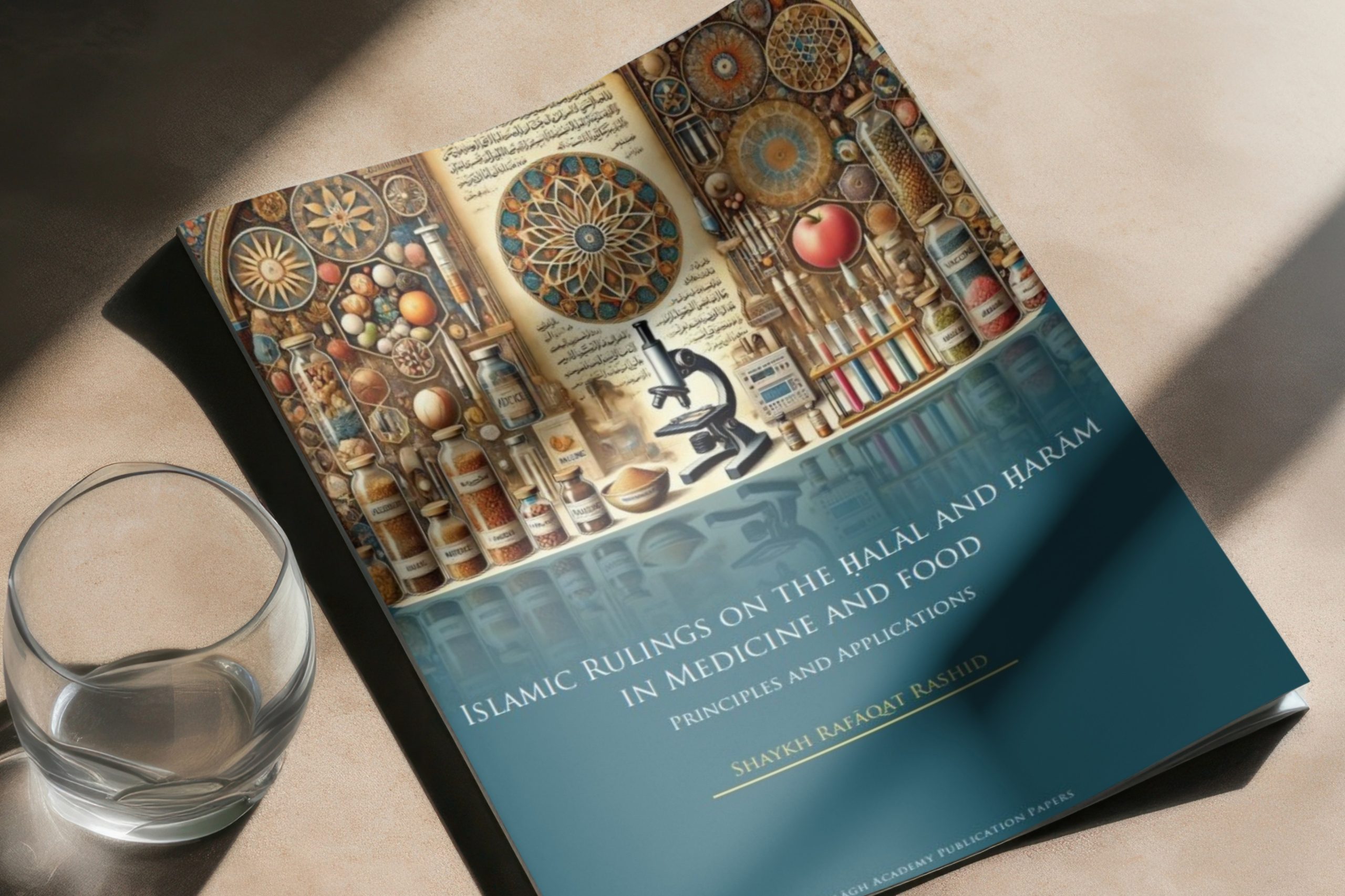
- Rashīd, R. (2024, November). Islamic rulings on the Ḥalāl and Ḥarām in medicine and food: Principles and applications. Al Balāgh Academy. Retrieved from https://halalmed.org/wp-content/uploads/2025/10/Islamic-Rulings-on-the-Halal-and-Haram-in-Medicine-and-food-Principles-and-Applications.pdf ↩︎